


Golden Coir VietNam

Our Guarantee
Handwoven in Vietnam from 100% natural coir. We are happy to support and assist you.

Product Information
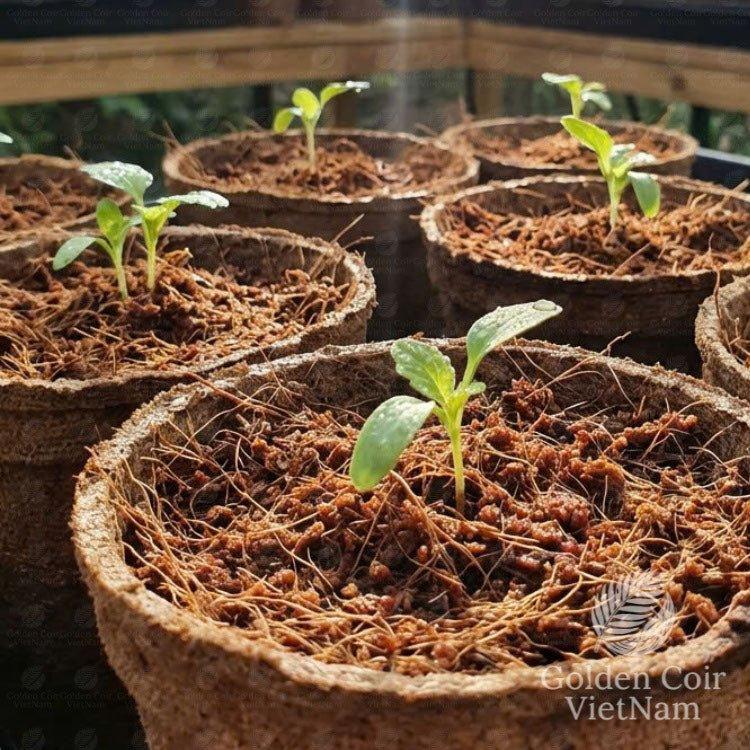
Low EC Coconut Coir Brick 5kg is a compressed growing medium made from natural coconut husk in Vietnam. It is designed for plant growing, seed starting, greenhouse production, potting mix blending, and hydroponic systems. For buyers comparing coconut coir brick options with peat moss or standard soil, this product offers a clean, space-saving, and easy-to-handle alternative.
1. Low EC Coco Coir Brick for Cleaner Growing
This product is processed to reach an EC of 0.5 mS or lower, helping growers who need a lower-salt substrate for seed starting, young plants, and controlled growing systems. The pH range of 5-7 also makes it workable for many crops and general horticulture use.
2. Strong Water Holding Capacity with Good Aeration
Once hydrated, each 5kg coconut coir brick expands to about 70 liters. The coir structure helps hold water while still allowing air to move around the root zone. That balance supports root development, reduces compaction, and makes the material useful in potting mixes, greenhouse benches, nursery production, and indoor plant care.
3. Practical Alternative to Peat Moss
For growers looking for a renewable growing medium, coco coir is widely used as a peat moss alternative. It is made from coconut fiber and coco pith, which are byproducts of the coconut industry. The compressed brick format also helps reduce storage space and shipping volume.
4. Made for B2B Buyers and Bulk Orders
This product is suitable for importers, distributors, greenhouse growers, and coco coir bricks suppliers looking for coco coir bricks bulk loading from Vietnam. It can also be combined with other coconut-based products in the same container, depending on order planning.
Technical Specifications
| Specification | Detail | User Benefit |
|---|---|---|
| Product Name | Low EC Coconut Coir Brick / Coco Coir Block | Easy to position as a clean growing medium for plants, hydroponics, and greenhouse use. |
| HS Code | 14049099 | Supports import and export documentation. |
| Origin | Vietnam | Reliable sourcing from a major coconut-producing region. |
| Material Composition | Fiber : Pith = 3 : 7 | Balanced structure for moisture retention and airflow in the root zone. |
| Weight | 5kg per brick | Close to 11 lb, a practical size for greenhouse, nursery, and bulk handling. |
| Product Size | 30 x 30 x 12 cm | Compact format for easier storage and pallet loading. |
| EC (Electrical Conductivity) | ≤ 0.5 mS | Low EC helps support cleaner substrate conditions for plant roots. |
| pH | 5 - 7 | Suitable range for many plant types and growing systems. |
| Expansion Volume | Approx. 70 liters per 5kg brick | High yield after hydration, helping improve value per unit. |
| Main Use | Plant growing, seed starting, potting mix, greenhouse, hydroponic system, soil amendment | Flexible use across commercial horticulture and home growing applications. |
| Reference Price | USD 530 / ton | Clear reference point for bulk buyers and import planning. |
| Pallet Loading | 200 bricks / pallet | Efficient handling and warehouse planning. |
| Container Capacity | 22 pallets / 40'HC container, around 22 tons total | Suitable for buyers looking for coco coir bricks bulk supply. |
Usage
This coconut coir brick is easy to prepare and can be used in many growing setups, including potting mix production, seed germination, hydroponics, greenhouse systems, and indoor gardening.
How to Use Coco Coir Bricks
- Step 1: Place the brick in a large tub, bin, or mixing area.
- Step 2: Add water gradually and allow the brick to absorb moisture.
- Step 3: Wait until the material expands and softens.
- Step 4: Break apart and fluff the coir by hand or with a garden tool.
- Step 5: Use it on its own or blend it with perlite, vermiculite, compost, or other substrate materials depending on the crop.
Common Applications
- Seed starting: Helps support moisture balance and early root growth.
- Potting mix blending: Works well with perlite, coco chips, bark, or compost.
- Hydroponic systems: Can be used in controlled growing setups that need a clean and stable substrate.
- Greenhouse and nursery use: Suitable for propagation, transplanting, and container production.
- Soil amendment: Helps improve soil structure, aeration, and water retention.
- Indoor and outdoor plants: Useful for potted plants, vegetables, flowers, and foliage plants.
Preparation Notes
Coco coir needs water before use. Actual water volume can vary depending on the starting moisture of the brick and the texture you want. The best approach is to add water in stages until the material reaches the right consistency for your growing method.
Quality and Handling Notes
Because coco coir is a natural material, weight may vary slightly with moisture content. Processed coir products may also show slight variation in pH and EC within normal production tolerances. For crops with more specific requirements, growers should test and adjust the substrate before large-scale use.
Shipping & Order Terms
Good to know: This product is offered for container-based export orders. It is set up for B2B buyers, importers, distributors, greenhouse operators, and buyers working with coco coir bricks suppliers.
Minimum Order
The minimum order quantity is 1 x 40'HC container. Different coconut-based products may be combined in the same container depending on availability and order planning.
Lead Time
Estimated lead time is 2-3 weeks from order confirmation to shipment. Actual timing may be shorter or longer depending on production schedule, season, and logistics conditions.
Trade Terms
- Trade terms: CNF and CIF only
- Insurance: For CIF orders, insurance is charged separately
- Payment terms: 30% deposit and 70% balance
- Production: Starts after deposit confirmation
- Bank charges: Remittance fees are paid by the sender
After Arrival
After the goods arrive at destination, the buyer is responsible for customs clearance fees and inland transportation to the warehouse.
Quality Claim Process
If there is a quality issue, please provide clear photos or videos showing the problem. This evidence helps the factory review the claim and respond more efficiently.


Golden Coir Vietnam
Based in Vietnam, we work closely with natural coconut fiber materials to create distinctive coir products with consistent quality and authentic craftsmanship.
100% Natural Coir
Biodegradable coconut fiber ideal for landscaping and outdoor living.
Factory-Direct Supply
Stable pricing, strict quality control, and custom coir products.
Fast U.S. Delivery
Reliable logistics options with responsive customer support.
Quality Guaranteed
Clear specifications and careful inspection for every shipment.
Frequently asked questions
How to use coco coir bricks?
To use coco coir bricks, place the brick in a large container or mixing area and add water slowly. Let the brick absorb the water and expand fully, then loosen the material by hand or with a garden tool. Once hydrated, the coir can be used for seed starting, potting mixes, soil amendment, greenhouse growing, and hydroponic systems.
How to use coconut coir bricks?
Using coconut coir bricks is simple. Hydrate the compressed brick with water, wait until it expands, and then fluff the coir before planting. You can use it on its own or blend it with perlite, vermiculite, compost, or coco chips depending on your crop and growing method.
How much does a brick of coco coir weigh?
This coconut coir brick weighs 5kg per brick, which is about 11 lb. It is a practical size for commercial growers, greenhouse operators, and buyers looking for coco coir bricks bulk.
How much water for coco coir brick?
The amount of water needed depends on the starting moisture content of the brick and the texture you want after expansion. The best method is to add water gradually until the coco coir brick expands fully and becomes loose enough for planting or mixing into your growing medium.
How to break coco coir bricks?
To break a coco coir brick, soak it first so the compressed material softens and expands. After that, you can separate the coir easily by hand or with a gardening tool. Breaking the brick while dry is harder because the material is tightly compressed for storage and shipping.
What is coco brick used for?
A coco brick is used as a growing medium, potting mix ingredient, soil amendment, seed starting substrate, mulch material, and hydroponic substrate. It is commonly used for vegetables, flowers, indoor plants, nursery production, greenhouse cultivation, and other horticultural applications.
What are the disadvantages of coco coir?
Coco coir needs hydration before use, and in some growing systems it may require nutrient adjustment depending on the crop. Because it is a natural product, factors such as moisture content, pH, and EC may vary slightly between batches. For more sensitive crops, growers should always test and adjust their substrate mix as needed.
How long do coco coir bricks last?
Coco coir bricks hold their structure well during use, but the actual lifespan depends on the crop, growing conditions, and how the material is managed. In many plant-growing applications, coco coir can last through a full crop cycle before it needs to be replaced, refreshed, or reprocessed.
Is coco coir good for calathea?
Yes. Coco coir can work well for calathea when it is blended properly to provide both moisture retention and airflow around the roots. For best results, many growers mix coco coir with perlite, bark, or other drainage materials to avoid overly wet conditions.


