
-
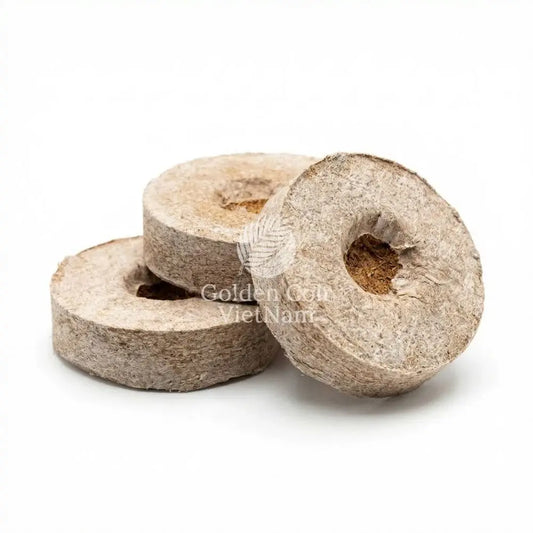
Coco Coir Pellets 35mm, Seed Starting Pellets for Root Development
Regular price $5.00 USDRegular price -
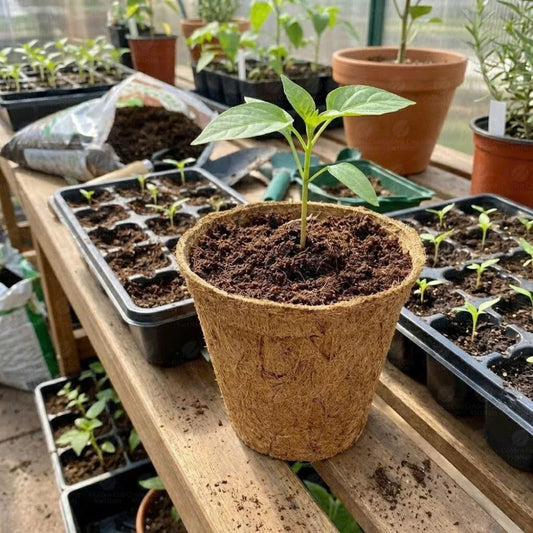
Coco Coir Pots, Round Coco Fiber Plant Pots
Regular price $2.00 USDRegular price -
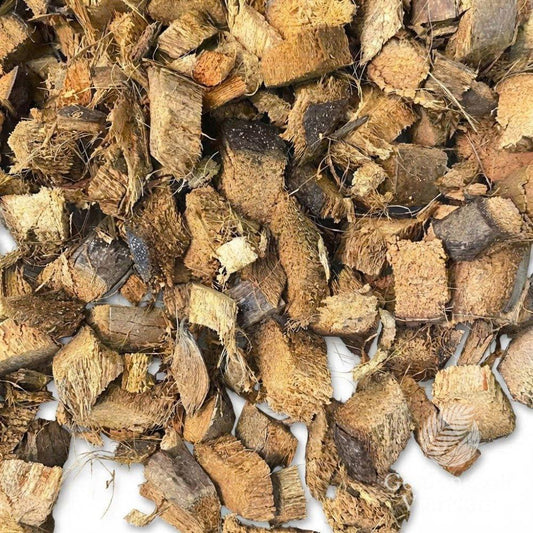
Coco Chips, Organic Coconut Husk Chips for Orchids, Aroids, Potting Mix
Regular price $5.00 USDRegular price -
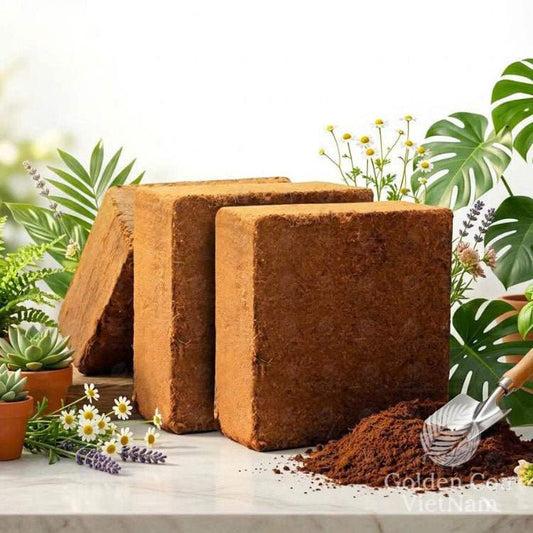
Coconut Coir Brick 5kg from Vietnam, Organic Coco Coir Bricks for Plants
Regular price $35.00 USDRegular price




WHAT IS COCO COIR?
Coco coir is a soil-free growing medium and soil amendment made from the outer husk of the coconut, specifically from Cocos nucifera. In gardening and horticulture, it is valued because it can hold water while still allowing air to move through the root zone. That balance matters because healthy roots need both moisture and oxygen to grow well.

Unlike dense garden soil or heavy clay, coco coir stays more open over time, which helps reduce compaction in containers, seed trays, raised beds, and hydroponic systems. It is widely used by home gardeners, greenhouse growers, and hydroponic growers who want a cleaner, lighter, and easier-to-manage alternative to heavier growing media.
Coco coir does not come from the edible part of the coconut or the hard inner shell. It comes from the fibrous material that surrounds the shell and is processed into different textures for different horticultural uses. Because it blends well with materials such as perlite, pumice, vermiculite, and compost, it works across many growing systems. At the same time, it is important to understand that coco coir is not a fertilizer. Its main role is to support root health, water management, and airflow.
- What is coco coir?
- How coco coir is made
- Why growers use coco coir
- What forms of coco coir can you buy?
- What is coco coir used for?
- Using coco coir in potting mixes
- Using coco coir in hydroponics
- Using coco coir for seed starting and propagation
- Using coco coir in small pots and raised beds
- How to wash and buffer coco coir
- Why coco coir needs a feeding plan
- Can you reuse coco coir?
- Where to buy coco coir and what to look for
- Coco coir vs. peat moss
- Advanced tips for growing in coco coir
- Frequently asked questions
WHAT IS COCO COIR AND WHY DOES IT MATTER FOR ROOT HEALTH?
Coco coir is valued because it creates a root environment that holds moisture while still allowing oxygen to move through the medium. That combination is important for seedlings, herbs, vegetables, houseplants, and hydroponic crops, because roots do not thrive in dense, airless conditions. When used correctly, coco coir gives growers a stable, manageable, and soil-free base for plant growth.
The main parts of coco coir and how they affect plant growth
Coco coir is usually divided into three main parts: coir pith, coir fiber, and coir chips. Each part plays a different role in the root zone, which is why texture matters so much when choosing a product.

Coir pith, sometimes called coco peat, is the fine, sponge-like part that holds the most water. Coir fiber is longer and more structural, which helps keep the medium open and improves airflow. Coir chips are the coarser pieces that create larger pore spaces and improve drainage. Many commercial products combine all three to create a more balanced air-to-water ratio.
| Coco coir part | Main role in the medium | Effect on plant growth | Best use |
|---|---|---|---|
| Coir pith | Holds moisture | Helps roots stay evenly moist | Seed starting, propagation, small containers |
| Coir fiber | Adds structure | Improves airflow and root movement | Potting mixes, general container growing |
| Coir chips | Creates larger pore space | Improves drainage and oxygen around roots | Hydroponics, large pots, fruiting crops |
| Mixed texture | Balances water and air | Supports broader crop use | General-purpose growing mixes |
| Fine screened material | Creates a more even texture | Helps uniform root development | Plug trays, seed cells, propagation trays |
Why coco coir is different from soil, peat moss, and other media
Coco coir is often compared with potting soil, peat moss, rockwool, and heavy garden soil because it combines traits from each without behaving exactly like any of them. Like peat moss, it can hold a large amount of water. Like a good potting mix, it can support roots without becoming overly dense. Like a hydroponic substrate, it can be used in systems where all nutrition comes from liquid feeding.
Compared with heavy soil, coco coir is lighter and less likely to compact in containers. Compared with peat moss, it usually rewets more easily after drying out. Compared with rockwool, many growers find it more flexible for both container gardening and hydroponic use. However, coco coir still requires good management because it has low natural nutrient content and can affect calcium and magnesium availability if it is not properly prepared.
| Medium | Main strength | Main weakness | How coco coir differs |
|---|---|---|---|
| Heavy soil | Natural mineral base | Can compact and reduce airflow | Coco coir is lighter and more open |
| Peat moss | Good water retention | Harder to rewet after drying | Coco coir usually rewets more easily |
| Rockwool | Consistent hydroponic structure | Less flexible for general gardening | Coco coir works in more systems |
| Compost-rich mixes | Adds nutrition | Can become too dense in pots | Coco coir is more structural than nutritional |
| Coco coir | Balanced air and moisture | Needs feeding and proper preparation | Works as a flexible, soil-free root medium |
HOW COCO COIR IS MADE

Coco coir is made from the husk that surrounds the hard shell of the coconut. While many people think of this husk as waste, horticulture uses it as a valuable raw material. After coconuts are harvested, the husks are separated from the shells and processed into usable growing media.
The finished product may look simple, but the quality of coco coir depends heavily on how it is handled during production. The way it is softened, broken down, screened, washed, and buffered affects salt level, texture, consistency, and overall suitability for plant growth.
From coconut husk to usable horticultural material

The production process begins with mature coconuts. After harvest, the outer husk is removed and collected. Mature husks are generally preferred because they provide stronger fiber and more stable organic material. The husks are then softened through retting, soaking, or mechanical processing so the fibers, pith, and chips can be separated more easily.

After separation, the material is screened to remove oversized pieces, extra dust, and unwanted debris. This step creates a more consistent product. A fine-textured product may be better suited for propagation trays, while a coarser product may be better for hydroponic grow bags and mature crops.
| Processing stage | What happens | Why it matters |
|---|---|---|
| Husk removal | Outer husk is separated from the shell | Provides the raw material for coir |
| Softening | Husk is retted or mechanically loosened | Makes fiber and pith easier to separate |
| Separation | Pith, fiber, and chips are sorted | Determines product texture and use |
| Screening | Dust and oversized debris are removed | Improves product consistency |
| Washing | Salts and residue are reduced | Makes coir safer for plant roots |
| Buffering | Coir is treated with calcium and magnesium | Reduces nutrient tie-up |
| Packaging | Material is bagged or compressed into bricks | Affects storage, transport, and setup time |
Why washing and buffering are essential for quality coco coir
Two of the most important preparation steps in coco coir production are washing and buffering. Washing helps remove dust, fine residue, and salts that can interfere with plant growth. Buffering helps prepare the medium so it does not bind calcium and magnesium too aggressively once plants are growing in it.
These are not minor improvements. They are what turn raw coconut material into a more dependable horticultural substrate. For hydroponics, seedlings, and sensitive crops, washed and buffered coir often provides a much safer and more predictable start.
| Preparation step | Purpose | Benefit for growers |
|---|---|---|
| Washing | Removes dust, loose debris, and salts | Reduces early root stress |
| Buffering | Stabilizes calcium and magnesium exchange sites | Improves nutrient availability |
| Using washed coir | Starts with a cleaner medium | Better for seedlings and hydroponics |
| Using buffered coir | Prevents early nutrient imbalance | Better for sensitive crops |
| Skipping both steps | Leaves the medium less stable | Higher risk of crop problems |
WHY GROWERS USE COCO COIR

Growers use coco coir because it solves several root-zone problems at the same time. It helps retain moisture, improves airflow around roots, and resists compaction better than many heavy soils and dense mixes. These traits make it especially useful in containers, trays, grow bags, raised beds, and hydroponic systems where root conditions directly affect plant health.
Another major advantage is flexibility. Coco coir can be used by itself in a controlled feeding system, especially in hydroponics, or blended with materials such as perlite, pumice, vermiculite, or compost to create custom potting mixes. That makes it useful across many crop types and growing setups.
How coco coir improves the root zone

The root zone is where coco coir shows its greatest value. Healthy roots need a balance of moisture, oxygen, and physical space. If the medium stays too wet and dense, roots can lose oxygen. If it dries too fast, roots become stressed. Coco coir helps avoid both extremes because it holds water while still maintaining pore space for airflow.
This structure helps roots spread more evenly through pots, trays, and grow bags. It also rewets more easily than many heavier media, which helps reduce dry pockets and makes irrigation more predictable.
| Root-zone factor | How coco coir helps | Why it matters |
|---|---|---|
| Moisture | Holds water around roots | Reduces drought stress between irrigations |
| Aeration | Keeps air pockets open | Helps roots stay active |
| Structure | Resists compaction | Supports steady root expansion |
| Rewetting | Takes up water again after drying | Improves irrigation consistency |
| Root spread | Creates a looser growing space | Helps plants establish more evenly |
Why coco coir works in containers, seed trays, raised beds, and hydroponics
One of the biggest strengths of coco coir is that it adapts to many growing systems without losing its core benefits. In containers, it helps create a lighter mix that drains well but still holds useful moisture. In seed trays, it provides an even texture for germination. In raised beds, it improves structure when blended into dense or fast-drying soil. In hydroponics, it serves as a stable root-support substrate for liquid feeding systems.
| Growing setup | Why coco coir fits | Main benefit |
|---|---|---|
| Containers | Creates a lighter potting base | Better moisture and airflow balance |
| Seed trays | Holds even moisture in a fine texture | Supports uniform germination |
| Raised beds | Improves soil structure when blended in | Better root access and water handling |
| Hydroponics | Functions as a stable substrate | Supports controlled liquid feeding |
| Propagation systems | Keeps the root zone moist but open | Helps cuttings and seedlings establish |
WHAT FORMS OF COCO COIR CAN YOU BUY?
Coco coir is sold in several forms, and the right choice depends on how you grow, how much preparation you want to do, and how much volume you need. The most common options are compressed bricks, loose bags, and washed-and-buffered blends.

Compressed bricks, loose bags, and how they differ in practical use
Compressed coco coir bricks are popular because they are compact, easy to store, and efficient to ship. Once hydrated, they expand into usable coir that can be used alone or blended with perlite, compost, pumice, or other ingredients. Loose bags, on the other hand, are already expanded and save time because they are ready to handle immediately.

If storage space matters more than speed, bricks are often the better choice. If time matters more than storage efficiency, loose bags are often the better option. What matters most is not only the form, but also whether the product is washed, buffered, and appropriate for your crop.
| Product form | Main advantage | Main limitation | Best for |
|---|---|---|---|
| Compressed bricks | Easy to store and ship | Need hydration and sometimes extra prep | Home growers, limited storage space |
| Loose bags | Faster to use | Take up more space | Large pots, raised beds, quick planting jobs |
| Fine-texture coir | Even structure | Can hold more water | Seed trays and propagation |
| Coarse coir blends | Better drainage | Less moisture retention | Fruiting crops and hydroponics |

Why washed and buffered coco coir is often the safest option
Washed-and-buffered coco coir is often the safest and easiest option because it reduces two common problems: excess salts and nutrient tie-up. A washed product has usually been cleaned to remove dust, residue, and salts. A buffered product has been treated so the medium is less likely to bind calcium and magnesium from the feeding program.
This type of product is especially useful for growers who want more predictable performance in seedlings, hydroponics, and container crops. It may cost more upfront, but it often reduces risk and saves time during setup.
| Product type | Why it is safer | Best suited for |
|---|---|---|
| Washed coir | Lower risk of salt-related issues | Containers, seedlings, hydroponics |
| Buffered coir | Better calcium and magnesium stability | Sensitive crops, young plants |
| Washed and buffered coir | Reduces both salt and nutrient tie-up risk | Most growers and most systems |
| Raw coir | More preparation required | Experienced growers only |
WHAT IS COCO COIR USED FOR?
Coco coir is used anywhere growers need a clean, stable medium that supports roots while helping manage water and airflow. It appears in potting mixes, seed trays, propagation setups, raised beds, grow bags, and hydroponic systems. Its value comes from the way it handles the root zone: it holds water efficiently, keeps air around roots, and stays more open than many heavy soils or compacted mixes.

Potting mixes, hydroponics, and propagation uses

One of the most common uses of coco coir is in potting mixes, where it acts as the main body of the blend. In hydroponics, it functions as a root-support substrate while nutrients are delivered through water. In propagation, it helps give seeds and cuttings an evenly moist, airy environment for early root development.
| Use | How coco coir is used | Why growers choose it |
|---|---|---|
| Potting mixes | Base for container blends | Better control over moisture and structure |
| Hydroponics | Root-support substrate | Works well with liquid feeding |
| Propagation | Medium for cuttings and transplants | Keeps the root zone moist and airy |
| Seed starting | Fine-textured tray medium | Supports early root development |
Raised beds, soil improvement, and general garden use

Coco coir is also widely used outside containers and hydroponics, especially in raised beds and soil improvement. In these systems, it is usually blended into existing soil or bed mixes to improve structure, reduce compaction, and help regulate moisture.
It works best as a physical amendment rather than a nutrient source. When paired with compost, mineral soil, or a fertilizer program, coco coir helps create a more root-friendly growing space without replacing the rest of the fertility plan.
| Use in garden systems | How coco coir helps | Practical result |
|---|---|---|
| Raised beds | Improves bed texture when mixed with soil and compost | Better water balance and root movement |
| Dense soil | Adds pore space | Reduces compaction |
| Fast-drying soil | Holds extra moisture | Improves consistency between waterings |
| General soil improvement | Lightens the structure without replacing soil completely | Easier root growth |
USING COCO COIR IN POTTING MIXES
Coco coir works especially well in potting mixes because container plants depend heavily on the physical quality of the medium. Their roots are limited to a small space, so the mix must manage water, air, and structure efficiently. Coco coir helps by creating a medium that stays lighter and more open than many dense soil-based blends.
A balanced coco coir mix for general container plants

A balanced coco coir potting mix for general container plants should hold enough water to prevent rapid drying, provide enough air to keep roots healthy, and include some nutritional support. A common starting point is a mix built around coco coir, perlite, and compost.
| Ingredient | Typical share | Function in the mix |
|---|---|---|
| Coco coir | 50% to 60% | Base medium for moisture and structure |
| Perlite | 20% to 30% | Increases drainage and airflow |
| Compost | 20% to 25% | Adds nutrition and microbial activity |
| Pumice | Optional substitute for perlite | Adds durable pore space |
| Vermiculite | Optional small amount | Increases moisture retention if needed |
How to adjust a coco coir mix for drainage, moisture, and crop type

One of the biggest advantages of using coco coir in potting mixes is that it can be adjusted easily to fit different crops. Plants such as succulents and Mediterranean herbs need more drainage and airflow, while seedlings, leafy greens, and many tropical plants benefit from steadier moisture.
For faster drainage, increase perlite, pumice, bark, or coarse chips. For more moisture retention, add a modest amount of vermiculite or fine coir. Crop stage matters too: young seedlings often do better in a finer mix, while mature fruiting plants often need more structure and airflow.
| Growing goal | What to increase | What to reduce | Outcome |
|---|---|---|---|
| Faster drainage | Perlite, pumice, bark | Fine coir and compost | More oxygen and quicker dry-back |
| More moisture retention | Fine coir, vermiculite | Coarse amendments | Longer moisture holding |
| More nutrition | Compost or worm castings | Inert materials | Richer container mix |
| Better structure for fruiting crops | Chips, fiber, pumice | Excess pith | Stronger long-term root support |
| Lighter seedling mix | Fine coir and light perlite | Heavy compost | Easier early root growth |
USING COCO COIR IN HYDROPONICS
Coco coir is one of the most widely used substrates in hydroponics because it supports roots without behaving like traditional soil. In hydroponic systems, the medium’s job is to hold the plant upright, manage moisture, and keep the root zone aerated. Coco coir fits that role very well.

Why coco coir performs so well as a hydroponic substrate
Coco coir performs well in hydroponics because it creates an active root environment without becoming overly wet or overly compact. Its structure allows moisture to stay close to the roots, while its fibers and pore spaces keep the root zone from collapsing into an airless mass. This makes it especially useful for tomatoes, peppers, cucumbers, herbs, and other fast-growing crops.
| Hydroponic quality | How coco coir performs | Why it matters |
|---|---|---|
| Water retention | Holds moisture near roots | Supports frequent feeding |
| Aeration | Maintains oxygen in the root zone | Helps prevent root suffocation |
| Structure | Resists compaction over a long crop | Useful for tomatoes, peppers, cucumbers |
| Flexibility | Works in bags, pots, buckets, and slabs | Fits many hydroponic systems |
| Texture control | Can be used alone or blended | Lets growers fine-tune drainage |
Basic setup and management tips for hydro growers using coco coir
Hydroponic success with coco coir depends on good preparation and management. The best starting point is usually a product labeled washed and buffered. If the product comes as a brick, it should be fully hydrated and broken apart evenly before use. The medium should be placed loosely into the container rather than packed tightly, because overpacking reduces air space.
Feeding should begin early because coco coir has very low inherent nutrient content. Growers should also monitor pH, calcium, magnesium, and runoff closely, since salt buildup can develop over time if excess solution does not drain properly.
| Setup step | What to do | Why it helps |
|---|---|---|
| Choose prepared coir | Use washed and buffered coir when possible | Reduces salt and nutrient issues |
| Hydrate evenly | Fully expand bricks or loosen dry coir | Prevents dry pockets |
| Fill loosely | Avoid packing the medium too tightly | Keeps air space available |
| Feed early | Start nutrients from the beginning | Coir does not feed plants by itself |
| Watch runoff | Check for drainage and salt buildup | Helps maintain a healthy root zone |
| Monitor Ca and Mg | Pay attention during early growth | Coir can affect their availability |
USING COCO COIR FOR SEED STARTING AND PROPAGATION

Coco coir is especially useful for seed starting and propagation because young plants need a medium that stays evenly moist without becoming tight or heavy. Seeds and fresh cuttings need moisture, oxygen, and a light structure around developing roots. Coco coir provides that balance very well.
Why coco coir is well suited to seedlings and cuttings

For seed starting, coco coir helps maintain stable moisture, which supports more even germination. In propagation, it helps fresh cuttings stay moist around the stem base while still allowing airflow through the medium. High-quality coco coir is also relatively clean and easy to work with in trays and plug cells.
| Seedling or cutting need | How coco coir helps | Benefit |
|---|---|---|
| Even moisture | Fine coir holds water around the root zone | Supports germination and rooting |
| Light structure | Medium stays loose | Helps delicate roots expand |
| Airflow | Prevents the root zone from becoming dense | Reduces rot risk |
| Clean texture | Easier to work with than outdoor soil | Better tray consistency |
| Rewetting ability | Rehydrates more evenly after drying | Improves tray management |
Practical seed-starting and propagation mixes with coco coir

A good coco coir mix for seed starting or propagation should be simple, light, and consistent. For most seeds, a fine-textured blend of coco coir and perlite works very well. For fresh cuttings, growers often use a slightly more open blend with a bit more perlite to reduce the risk of stem rot while still holding enough moisture for rooting.
| Use | Suggested mix | Why it works |
|---|---|---|
| Seed starting | 70% coco coir / 30% perlite | Balances moisture and airflow |
| Cuttings | 60% coco coir / 40% perlite | Gives extra aeration around new roots |
| Plug trays | Fine coir with a small amount of perlite | Helps uniform filling and even moisture |
| Rooted transplants | Coir with a light compost addition after rooting | Adds gentle structure and some nutrition |
USING COCO COIR IN SMALL POTS AND RAISED BEDS

Coco coir can be used successfully in both small pots and raised beds, but it should be handled differently in each. Small pots have limited root volume, so drainage and airflow become more sensitive. Raised beds, on the other hand, usually function as blended soil systems and benefit most when coco coir is used as an amendment rather than a complete replacement for soil.
Best practices for using coco coir in small pots

In small pots, coco coir works best when it is part of a loose, fast-draining blend. Perlite or pumice should usually be included to preserve air space. The pot must have drainage holes, and the medium should not be packed tightly into the container.
| Small-pot practice | Why it matters |
|---|---|
| Use a loose blend with perlite or pumice | Small pots lose air space quickly if the mix is too dense |
| Do not compact the medium | Pressing the mix down reduces root oxygen |
| Use pots with drainage holes | Prevents water from sitting in the root zone |
| Monitor moisture more often | Small pots dry faster than larger containers |
| Feed early but lightly | Coir has very low nutrient content |
How to use coco coir effectively in raised beds
In raised beds, coco coir is usually most effective when it is blended with compost and mineral soil to improve texture and water handling. It can help beds that dry too quickly, compact too easily, or become too heavy after repeated watering.
Pure coco coir is usually not the right choice for filling an entire raised bed, because it does not provide enough fertility on its own. Its value is mainly physical: it helps improve structure, pore space, and root movement.
HOW TO WASH AND BUFFER COCO COIR
Washing and buffering are two preparation steps that strongly affect how coco coir performs after planting. Washing removes dust, fine residue, and excess salts. Buffering prepares the medium so it is less likely to bind nutrients such as calcium and magnesium once the plant is growing.
Why coco coir should be washed before it is buffered

Washing should come before buffering because the buffer solution needs to move through clean, fully hydrated material. If the coir still contains dust, salts, or compacted dry pockets, buffering will be uneven and the final medium will be less reliable.
| Step | Reason |
|---|---|
| Hydrate first | Opens the material fully |
| Break apart clumps | Exposes hidden dry pockets and residue |
| Wash next | Removes salts and dust before treatment |
| Buffer after washing | Allows calcium-magnesium treatment to work more evenly |
| Drain properly | Leaves the coir ready for planting |
How to buffer coco coir at home with less risk
Buffering coco coir at home means treating the medium with a calcium and magnesium solution so it does not pull those nutrients away from the plant after planting. The safest home method is usually to use a commercial calcium-magnesium product and follow the manufacturer’s dilution instructions.
After the coir has been fully hydrated and washed, it should be soaked or thoroughly saturated with the prepared buffer solution. Once the soak is complete, the medium should be drained well before use.
| Step | Action | Why it matters |
|---|---|---|
| 1 | Fully hydrate the coir | Makes treatment more even |
| 2 | Wash with clean water | Removes dust and salts |
| 3 | Prepare a calcium-magnesium solution | Supports stable nutrient exchange |
| 4 | Soak or saturate the coir | Reaches the full mass of material |
| 5 | Let it drain well | Prevents soggy planting conditions |
| 6 | Use while moist and loose | Keeps the structure suitable for roots |
WHY COCO COIR NEEDS A FEEDING PLAN
Coco coir is a strong growing medium, but it is not a complete nutrient source. Its main value lies in its physical properties: it holds water, improves aeration, and supports roots. It does not provide enough nutrition for sustained plant growth, so crops grown in coco coir still need compost, fertilizer, or a liquid feeding program.
Why coco coir is not a complete nutrient source
Coco coir behaves more like a structural support than like a fertile soil. It helps create the physical environment roots need, but it does not provide enough nitrogen, phosphorus, potassium, calcium, magnesium, and micronutrients to sustain a crop over time.
| What coco coir provides | What it does not provide | What growers must add |
|---|---|---|
| Water retention | Full nutrition | Fertilizer or nutrient solution |
| Aeration | Enough nitrogen, phosphorus, and potassium | A feeding plan |
| Root support | Reliable calcium and magnesium supply | Buffering and nutrient management |
| Structure | Long-term crop fertility | Compost or balanced feeding inputs |
How coco coir affects nutrient uptake, especially calcium and magnesium
Coco coir affects nutrient uptake because it is chemically active. One of the biggest concerns is its tendency to bind calcium and magnesium if it is not properly buffered. That can lead to early deficiencies or weak growth even when fertilizer is being applied.
Good management in coco coir means more than simply feeding the plant. It also means paying attention to preparation, pH, runoff, and salt buildup. When washing, buffering, and feeding are handled correctly, coco coir becomes much easier to manage.
| Nutrient factor | Effect in coco coir | Grower response |
|---|---|---|
| Calcium | Can be tied up if coir is not buffered | Use buffered coir and monitor early growth |
| Magnesium | May be less available at first | Include Mg support in feeding |
| pH | Affects how nutrients stay available | Keep pH in the correct working range |
| Salt buildup | Can reduce uptake over time | Check runoff and drainage regularly |
| Root aeration | Supports stronger absorption when the mix stays open | Avoid compaction and overwatering |
CAN YOU REUSE COCO COIR?
Yes, coco coir can be reused, and that is one reason many growers consider it practical. Because of its lignin and cellulose content, coco coir usually holds its structure longer than many light organic materials. However, reuse is only a good idea when the material is still physically open, reasonably clean, and free from serious contamination.
How to tell whether used coco coir is still worth saving

The first thing to check is structure. Good reusable coir should still feel loose, fibrous, and easy to separate by hand. It should not feel muddy, greasy, or heavily compacted. Crop history also matters. If the previous plants were healthy and had no serious root disease, reuse is usually safer.
| Condition | Save it or not | Why |
|---|---|---|
| Loose and fibrous | Save | Still supports roots and airflow |
| Drains well | Save | Root zone is still functional |
| Healthy previous crop | Save | Lower disease risk |
| Heavy salt buildup | Maybe | Needs strong rinsing before reuse |
| Muddy or compacted | Do not save | Poor structure and low aeration |
| Sour smell or slime | Do not save | Suggests contamination or breakdown |
| Diseased roots in previous crop | Do not save | Too risky for the next planting |
How to reuse coco coir the right way
To reuse coco coir properly, start by removing old roots, stems, and debris. Break apart the medium, inspect it carefully, and discard anything sour-smelling, slimy, or associated with diseased roots. The usable material should then be rinsed thoroughly, drained, and ideally buffered again before replanting.
| Reuse step | What to do | Why it matters |
|---|---|---|
| Remove roots and debris | Clean out old crop material | Improves the next planting environment |
| Inspect texture and smell | Separate usable from poor material | Prevents reuse of damaged coir |
| Rinse thoroughly | Wash out fertilizer salts and residue | Reduces carryover problems |
| Drain well | Avoid soggy reused medium | Improves root-zone stability |
| Re-buffer | Restore calcium and magnesium balance | Reduces nutrient tie-up in the next crop |
| Refresh the mix if needed | Add fresh coir, fiber, perlite, or pumice | Restores structure |
WHERE TO BUY COCO COIR AND WHAT TO LOOK FOR
Coco coir can be bought from online stores, hydroponic suppliers, garden centers, and bulk suppliers. The best source depends on how much material you need, what crop you are growing, and how much preparation you are willing to do. No matter where you buy, the most important step is reading the label carefully and understanding what the product actually contains.
How to compare coco coir products before buying

The most important points to compare are whether the product is washed, whether it is buffered, what texture it has, and whether it is sold as a brick or a bag. Fine-textured products usually suit seed starting and propagation better, while coarser blends work better for larger containers, hydroponics, and fruiting crops.
| Comparison point | Why it matters |
|---|---|
| Washed or unwashed | Determines salt risk and cleanup needs |
| Buffered or unbuffered | Affects early nutrient stability |
| Fine, coarse, or mixed texture | Changes drainage and moisture behavior |
| Brick or bag format | Affects storage and prep time |
| Clear crop-use labeling | Helps match the product to the growing method |
| pH and salt information | Adds trust and practical value for the buyer |
COCO COIR VS. PEAT MOSS
Coco coir and peat moss are often compared because both are used to hold water, support roots, and form the base of seed-starting mixes and potting media. In practice, they behave differently over time, especially when watering patterns, aeration, and long crop cycles are considered.
The biggest performance differences between coco coir and peat moss
Coco coir generally rewets more easily after drying out, which makes watering more forgiving in seed trays and containers. It also tends to stay more open over time, especially when blended well. Peat moss can perform very well, but it may compress more depending on the mix and can be harder to rehydrate fully once dry.
| Performance factor | Coco coir | Peat moss |
|---|---|---|
| Rewetting | Usually easier after drying | Can be harder to rehydrate fully |
| Structure over time | Often stays more open | Can compress depending on the blend |
| Air-to-water balance | Strong in containers and hydro systems | Good, but depends more on amendments |
| Preparation needs | May need washing and buffering | May need pH adjustment |
| Flexibility | Useful in more systems | Common mainly in potting and seed-starting mixes |
Why many growers move from peat moss to coco coir
Many growers move from peat moss to coco coir because they want a medium that is easier to rewet, more adaptable across systems, and often viewed as more renewable. Coco coir works well in seed trays, pots, raised beds, and hydroponics, which makes it attractive to growers who want one adaptable base material across many stages of production.
| Reason | Why growers value it |
|---|---|
| Easier rewetting | Helps reduce dry pockets and uneven watering |
| Better long-term structure | Supports roots through longer crops |
| More system flexibility | Works in trays, pots, raised beds, and hydroponics |
| Cleaner handling | Easier to use indoors and in greenhouse setups |
| Renewable byproduct image | Appeals to sustainability-minded buyers |
Frequently Asked Questions
What is coco coir made from?
Coco coir is made from the outer husk of the coconut. It comes from the fibrous layer surrounding the hard shell and is processed into pith, fiber, chips, or blended textures for horticultural use.
Is coco coir better than soil for container plants?
For many container plants, coco coir can be easier to manage than heavy soil because it stays lighter, resists compaction, and helps maintain a better balance between moisture and airflow. However, it still needs a proper feeding plan because it is not a complete nutrient source.
Does coco coir need to be washed and buffered?
Yes, high-quality coco coir is usually washed and buffered because these steps help remove excess salts and reduce calcium-magnesium tie-up. Washed-and-buffered coir is generally the safest option for seedlings, containers, and hydroponic systems.
Can you use coco coir in hydroponics?
Yes. Coco coir is widely used in hydroponics because it holds moisture while still allowing oxygen to reach the roots. It works well in grow bags, buckets, pots, drip systems, and other hydroponic setups, especially when paired with a controlled nutrient program.
Can coco coir be reused?
Yes, coco coir can often be reused if it still has good structure, drains well, and comes from a healthy previous crop. Before reuse, it should be cleaned, rinsed, inspected carefully, and ideally buffered again to reduce nutrient problems in the next crop.
What is the difference between coco coir and peat moss?
Coco coir usually rewets more easily after drying and often stays more open over time, while peat moss is still widely used in seed-starting and potting mixes but can be harder to rehydrate fully once dry. Many growers choose coco coir because it is flexible across containers, raised beds, and hydroponic systems.
100% Natural Coir
Biodegradable coconut fiber ideal for landscaping and outdoor living.
Factory-Direct Supply
Stable pricing, strict quality control, and custom coir products.
Fast U.S. Delivery
Reliable logistics options with responsive customer support.
Quality Guaranteed
Clear specifications and careful inspection for every shipment.