
-
Coco Fiber Tree Ring, Natural Coir Mulch Mat for Pots, Trees, and Garden Beds
Regular price $1.00 USDRegular price -
Coir Mulch Mat, Natural Weed Suppression, Moisture Retention
Regular price $10.00 USDRegular price

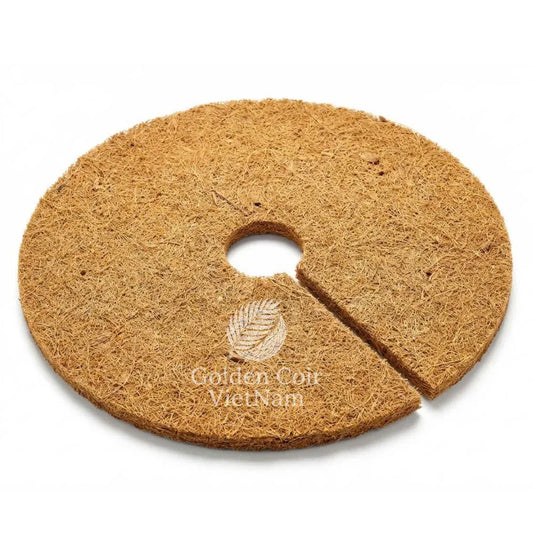

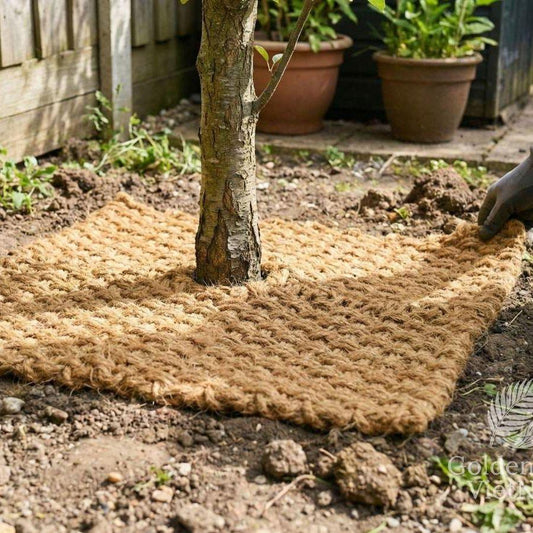
WHAT ARE COCO MULCH MATS?
A coco mulch mat is a plant cover made from coconut husks. Makers press or weave the fibers together to build a shape. Brands like Golden Coir Vietnam supply these as rolls for yard beds or as circles with a center hole. Gardeners slide the circle mats around the base of trees or plants. The fiber blocks sunlight to stop weed seeds from sprouting. The mat covers the ground to trap water and block wind from blowing the dirt away. Loose fibers come in bags and take time to spread. A mat is one piece. You drop it into place on the soil. The material rots into the ground over time and returns nutrients to the yard.

Why coco mulch is the superior moisture retainer for your garden?
Many gardeners water frequently and still end up with dry soil, stressed roots, and stubborn weeds. Bare soil can lose moisture quickly in sun, heat, and wind. Some inorganic or synthetic mulches reduce evaporation, but they can also trap heat, shed water, or feel unnatural in planting beds. Coco mulch solves the problem differently: it absorbs water, holds it near the surface, and releases it gradually where roots can use it.

Made from the husk of Cocos nucifera, coco mulch is a by-product of the coconut industry that fits well in organic gardening. Its fibrous texture acts like a sponge. Once hydrated, it becomes highly absorbent and helps reduce irrigation frequency in garden beds, landscaped areas, and containers.
Functionally, coco mulch behaves like a light soil conditioner as much as a surface cover. It supports moisture balance, keeps soil from crusting, and helps protect roots. Environmentally, it is biodegradable and renewable, unlike plastic-based ground covers or products that add microplastics to the soil. For gardeners who prefer low-chemical approaches, it offers a practical, sustainable choice.

Many horticulture references note that coconut coir can hold 8 to 10 times its dry weight in water while still draining well. That combination is why it performs well in water-conscious gardens and hot climates. A technical overview is available here: University of Florida IFAS Extension on coconut coir.
Why Buy Coco Mulch mat From Golden Coir Vietnam
In a world of synthetic plastics, we focus on natural quality and sustainability. When you shop with us, you are not just buying a product; you are supporting a business that values environmental craftsmanship and customer satisfaction.
- ✔️Natural Outdoor Products: Our store offers coco mulch mats, coconut umbrellas, and sun shade sails to protect your plants and cool your yard.
- ✔️100% Sustainable Materials: We guarantee the use of natural coconut coir for our premium shade structures.
- ✔️Fast & Reliable Shipping: Orders are packed carefully and shipped with tracking information provided.
- ✔️Secure Checkout: Your personal and payment information is strictly protected and kept secure.
- ✔️Exceptional Customer Service: We are always happy to help with maintenance tips or installation guides.
The science of water retention in fibrous coir
Coco mulch is made of coir fibers, tough strands from coconut husk. These fibers contain countless small pores that capture and hold water after hydration. When wet, the fibers swell and interlock into a stable mat-like structure. This helps reduce runoff during rain and irrigation, keeping water in the root zone instead of letting it flow away.
This “sponge + structure” effect is especially useful in raised beds and vegetable plots where the top layer can dry fast. After you hydrate compressed coco bricks and fluff the expanded coir, it spreads evenly and helps keep moisture close to shallow roots. Plants experience less stress in hot spells, and growth becomes more consistent.
Coir is also often discussed for its cation exchange capacity (CEC), meaning it can hold onto certain nutrients while still providing airflow and drainage. In practice, this makes it helpful in containers, soil blends, and areas where roots dry out quickly.

Compared with straw or grass-based mulches, coco fibers break down more slowly. Their high lignin content helps them hold shape through repeated wet/dry cycles, so they can remain effective for multiple seasons.
Soil aeration and temperature control
Moisture is only half the story, roots also need oxygen. Some mulches compact or form dense layers that block airflow. Coco mulch stays relatively springy and porous after watering, allowing air to move between fibers even when moisture is present.
That balance supports root health and can help moderate soil temperature. In summer, moisture held near the surface can reduce heat stress and slow evaporation. In cooler months, the fibrous layer provides light insulation and helps reduce rapid temperature swings that can stress young plants.
Many gardeners pair coco mulch with mats or rings around shrubs and young trees: the top layer suppresses weeds while the coir beneath maintains moisture. Because coir is typically near neutral to slightly acidic, it usually fits well in mixed beds without pushing soil pH strongly in either direction.

Comparing coco mulch with pine bark and traditional options
Season after season, many gardeners buy mulch again because what they applied broke down quickly, floated away, or failed to keep soil evenly moist. Pine bark can shift during heavy rain, straw decomposes quickly, and bare soil invites weeds while drying fast. Over time, these issues increase both labor and watering costs.

Coco mulch behaves more like a light soil conditioner than a decorative cover. Once hydrated, its fibers lock together and tend to stay in place on open beds and mild slopes. It also delivers moisture retention while still allowing airflow, something many dense mulches struggle to balance.
Material choice affects moisture, stability, and maintenance. Synthetic and inorganic options can last longer but may trap heat or create runoff. Peat-based amendments help moisture but raise sustainability concerns. Coco mulch offers a middle ground: strong moisture performance, good aeration, biodegradable structure, and generally pet-friendly characteristics when properly processed.
The comparison below summarizes common options.
| Factor / Material | Water retention capacity | Decomposition rate | Stability in rain | Pet safety |
|---|---|---|---|---|
| Coco mulch | High, holds 8 to 10 times dry weight | Slow, about 2 to 4 years | Stable due to interlocking fibers | Non-toxic when washed and buffered |
| Pine bark mulch | Moderate | Medium, often one to two years | Can float and shift | Generally safe |
| Straw mulch | Low to moderate | Fast, often one season | Blows and washes away | Safe but can attract pests |
For gardeners willing to invest in higher-performance mulch, coco mulch can reduce replacement cycles and watering frequency. That translates to less work over time and stronger results in beds that dry quickly.
Durability and why coir lasts longer than wood-based mulch
Durability largely comes down to chemistry. Coco mulch is rich in lignin, a tough compound that slows microbial breakdown. That helps coir keep its structure longer than many straw-like materials, maintaining coverage and performance across seasons.
Pine bark and many wood-based mulches can break down faster when constantly exposed to moisture. As they decompose, they may compact, reducing airflow and creating a denser layer that can encourage weeds or require frequent top-ups.
Coco mulch tends to hold its “spring” and texture through repeated watering cycles. That stable structure helps protect roots in beds, borders, and areas around young shrubs and trees.

Resistance to rain and wind in real garden conditions
Weather is a true stress test for mulch. Bark nuggets can float when soil is saturated, and straw can blow away or shift easily. Bare soil erodes, exposing roots and moving weed seeds into open spaces.
Once coco mulch is hydrated, its fibers swell and interlock, creating weight and grip. This results in strong stability under heavy rain and helps keep the surface layer intact, even in open beds.
For gardeners choosing between compressed bricks and loose bags, the end result is similar after hydration. Bricks mainly improve storage and shipping efficiency, while loose bags reduce prep time.

Is coco mulch safe for dogs and pets? Debunking common myths
Pet owners often hesitate when choosing mulch because dogs and cats may dig, chew, or ingest small pieces. Some mulches can cause digestive irritation, and a few can be dangerous. A common source of confusion is cocoa shell mulch, which smells appealing to dogs and can be toxic due to naturally occurring compounds found in chocolate-related materials.
Coco mulch is different. It comes from coconut husk fiber, not cocoa shells. When washed and buffered, coconut coir is generally considered non-toxic if a pet ingests small amounts. It does not contain the same compounds associated with cocoa shell risk.
That said, pet safety still depends on product quality and use. Some dyed or contaminated materials may cause issues, and any mulch can cause stomach upset if a pet eats a large quantity. But as a category, properly processed coir is widely used in gardening and even animal bedding applications.

Understanding the confusion between cocoa shell mulch and coconut coir
The names sound similar, but the materials come from completely different industries. Cocoa shell mulch is a chocolate-processing by-product; coconut coir comes from the husk of coconuts.
Cocoa shells often smell like chocolate, which can attract dogs. Coconut coir is fibrous and earthy, typically less appealing to chew. Most importantly, coconut coir does not contain the same chocolate-related compounds that make cocoa shell mulch risky.
If pet safety is a priority, follow these simple rules:
- Choose products labeled coconut coir, coco mulch, or coir fiber, not cocoa shell mulch.
- Rinse or pre-soak new coir to reduce salts and dust.
- Use the correct depth and keep mulch slightly away from stems to reduce mold and mess.

Practical tips for pet-friendly mulching at home
Start with a clean, level surface. Remove sharp debris and break up compacted soil lightly so the mulch layer sits evenly.
If using compressed bricks, hydrate slowly until the fibers expand fully, then fluff to reduce clumps. This improves appearance, stability, and reduces loose strands that pets may pull at initially.
Spread an even layer and keep it a few centimeters away from plant stems. This helps airflow and reduces the chance of moisture buildup near the base of plants.
For trees and shrubs, combining coco mulch with rings or mats can reduce weeds and discourage digging. Supervise pets for the first day or two; most lose interest once the mulch settles.

Understanding the format: choosing between compressed bricks and loose bags
Buying the right format matters. Loose bags are convenient and fast to apply, but they take up more space and often cost more to ship. Compressed bricks are compact and efficient for storage, but they require hydration and fluffing to perform at their best.
Both formats come from coconut husk and support moisture retention, soil aeration, and weed suppression. The best choice depends on storage space, project size, and how quickly you want to apply the material.
Many suppliers describe a compression ratio around five-to-one. In practical terms, that means a brick expands significantly after hydration, delivering more usable volume than its packaged size suggests.
Dust control is another factor. Loose coir can be dusty when poured, while bricks are cleaner in storage but may release dust if broken while dry. Either way, light misting and gentle handling reduce dust and improve the experience.
| Decision point | Compressed brick | Loose bag |
|---|---|---|
| Best for | Bulk buying, limited storage space, larger projects | Quick top-ups, small beds, easy daily use |
| Prep time | Needs hydration and fluffing | Ready to spread |
| Mess control | Clean storage, some dust during hydration | More loose fibers during pouring and transport |
| Consistency | Very consistent when hydrated correctly | May vary with bag moisture and batch handling |
| Sustainability | Lower shipping impact per usable volume | Higher shipping impact per usable volume |
The economics of compressed blocks and what “five-to-one” means
Compressed blocks reduce freight because they ship dense material rather than “air.” That’s why they are popular for landscape projects and retail storage. Once hydrated, a single brick expands into a much larger volume of usable mulch. For larger beds and repeat use, bricks often provide better storage efficiency and cost-per-coverage.
Expanding options: Coir mulch mats and tree rings for targeted protection
While loose mulch is versatile for garden beds, some situations require a more structural approach. Mulch mats and tree matting offer a stable alternative for areas prone to erosion or around young plants where loose material might scatter.
These products are made by pressing coir fibers into a dense, permeable layer, often with a natural latex binder. This creates a ready-to-use barrier that suppresses weeds while allowing water and air to reach the soil. A mulch mat roll is particularly effective for lining walkways or covering sloped banks where loose bark would wash away in the first rain.
Erosion control and weed suppression for young trees
For saplings and shrubs, mulch tree rings provide a pre-cut solution that slips easily around the trunk. They serve a dual purpose: they prevent grass from competing for nutrients and create a physical buffer that protects the bark from string trimmer damage. Unlike plastic barriers, these rings breathe naturally and eventually biodegrade into the soil.
Using mulch mats for trees simplifies maintenance. Gardeners can simply place the ring, water it in, and leave it. There is no need for annual topping up, and the consistent coverage keeps the root ball moist during critical establishment months.

Natural coir vs. fake mulch mats
Shoppers often encounter a fake mulch mat made from recycled rubber or synthetic fabric. While these claim to last forever, they have significant downsides. Rubber mats can absorb intense heat, potentially cooking the shallow roots they are meant to protect. They also do not improve soil health as they degrade.
In contrast, natural coir mats regulate soil temperature and add organic matter as they slowly break down. For a truly sustainable landscape, choosing authentic fiber products over synthetic imitations ensures that your garden remains plastic-free and biologically active.
The sustainability edge: why coco mulch is a renewable alternative to peat moss
Many gardeners want healthier plants without harming sensitive ecosystems. Peat moss has long been used to improve moisture and structure, but extracting peat can damage peatlands and release stored carbon. For gardeners moving toward peat-free practices, this creates a real challenge.
Coco mulch offers a practical alternative. It uses coconut husk fiber, material left after coconut harvesting, transforming a by-product into a useful garden input. Instead of being discarded, the husk becomes coir that supports moisture management, aeration, and weed suppression.
Peat forms over extremely long timescales, while coconut palms produce harvests regularly. That renewability makes coir an appealing option for gardeners seeking more sustainable inputs.
Because coco mulch is biodegradable, it can break down naturally at the end of its life without leaving synthetic residue. For gardeners balancing performance and environmental values, it provides a strong combination of practical results and improved sustainability.
From waste fiber to soil improvement through a closed-loop use case
Each coconut harvest generates husk material. Through processing and drying, that husk becomes coir: a brown, fibrous material that improves moisture handling and helps soil stay open and breathable.
This creates a simple closed-loop story: agricultural by-product becomes gardening resource, then eventually returns to the soil as organic matter. Because coir has relatively high lignin content, it breaks down slowly, delivering multi-season coverage and reducing frequent replacement.
To get the best results:
- Choose washed and buffered coir to reduce salts.
- Hydrate compressed material fully and fluff before spreading.
- Apply an even layer to protect roots and reduce evaporation.

Protecting peatlands while meeting everyday gardening needs
Peatlands store carbon and help regulate water systems. Draining them for peat disrupts those benefits, which is why many gardening organizations encourage peat reduction.
Coco mulch meets similar everyday needs, moisture support, structure, and root-zone protection, without extracting slow-forming peat resources. It helps the soil hold water near roots, reduces watering frequency, and supports steady plant growth in beds and containers.
If you are transitioning away from peat, do it in stages:
- Mix coir into planting holes or bed soil during new plantings.
- Use finer coir (coco peat) in seed-starting and potting mixes.
- Use fibrous coco mulch on top as a moisture-retaining surface layer.
This approach supports long-term soil health and aligns with peat-free gardening goals without sacrificing plant performance.

Frequently Asked Questions
Is coco mulch safe for dogs and cats?
Yes, unlike "cocoa shell mulch" which can be toxic, coconut coir mulch is generally safe for pets. It is made from coconut husks and does not contain theobromine. However, monitor your pets to ensure they do not ingest large quantities, as eating any fibrous material can cause digestive upset.
Does coconut mulch attract termites or bugs?
No. Coconut coir is naturally resistant to pests, including termites, due to its high lignin content. Unlike wood chips or bark mulch, it does not provide a food source for termites, making it a safer choice for use near home foundations.
How often should I replace coco mulch?
Coco mulch is highly durable and typically lasts 2 to 4 years before fully decomposing. You may need to top dress the layer lightly each spring to maintain a fresh appearance, but total replacement is rarely needed annually compared to straw or bark.
Can I use coco mulch for vegetable gardens?
Absolutely. Coco mulch is excellent for vegetable beds because it retains moisture, regulates soil temperature, and is pH neutral (typically 5.5–6.8). It is also 100% biodegradable, so it eventually breaks down to add organic matter to your soil.
How do I prepare a compressed coco coir brick?
To prepare a brick, place it in a large container (like a wheelbarrow or bucket) and add water slowly. Allow it to sit for 15–20 minutes to absorb the water and expand (usually 5 to 7 times its size). Fluff the material with a garden fork before spreading it on your beds.
100% Natural Coir
Biodegradable coconut fiber ideal for landscaping and outdoor living.
Factory-Direct Supply
Stable pricing, strict quality control, and custom coir products.
Fast U.S. Delivery
Reliable logistics options with responsive customer support.
Quality Guaranteed
Clear specifications and careful inspection for every shipment.